
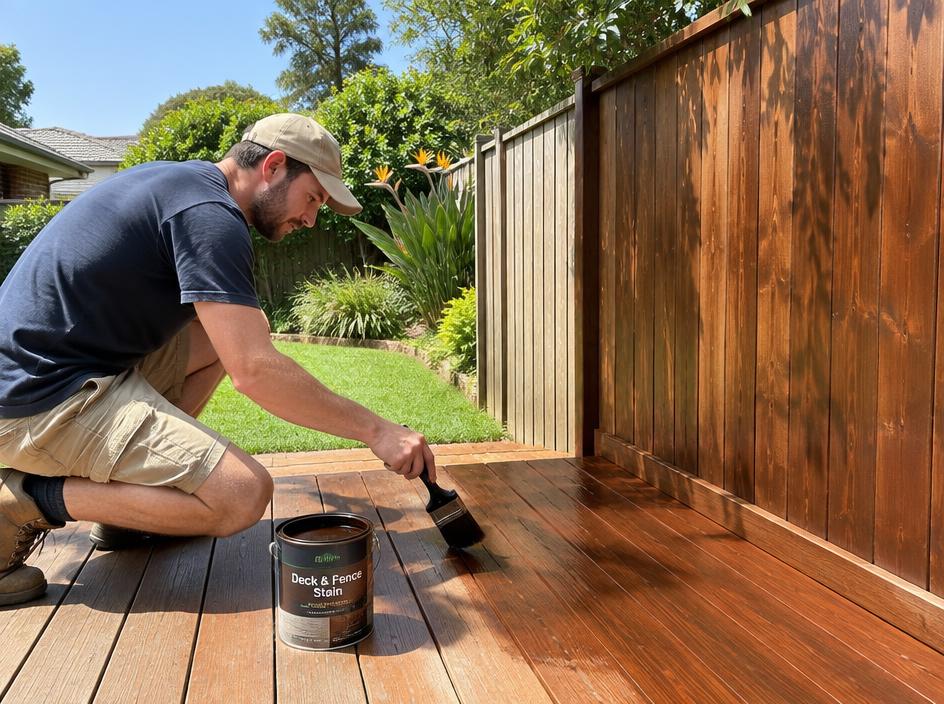
Staining New Timber Fences
First coats on new palings once the timber is dry enough to absorb stain evenly.
Fence painting and staining Wagga Wagga homeowners book is usually about two things: making a grey, tired fence look cared for, and slowing down the splitting and cupping that strong sun causes in bare timber.
We clean, prepare and coat timber paling, picket and lapped fences with stains, oils or exterior paint, and refresh suitable metal fences where a coating is appropriate.
First coats on new palings once the timber is dry enough to absorb stain evenly.
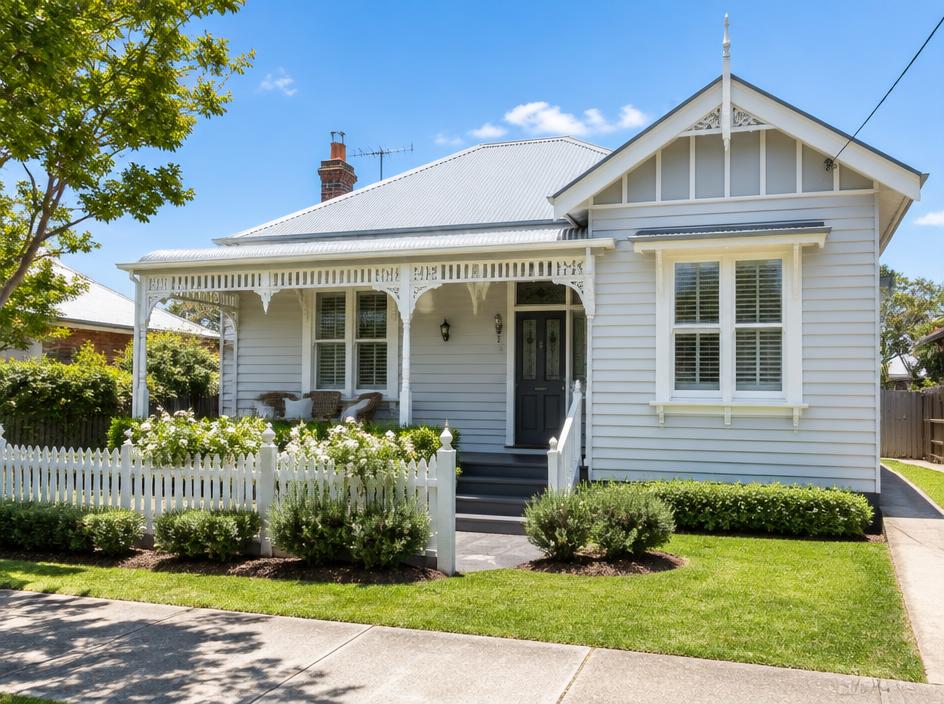
Cleaning grey, aged timber back to sound wood before re-coating.
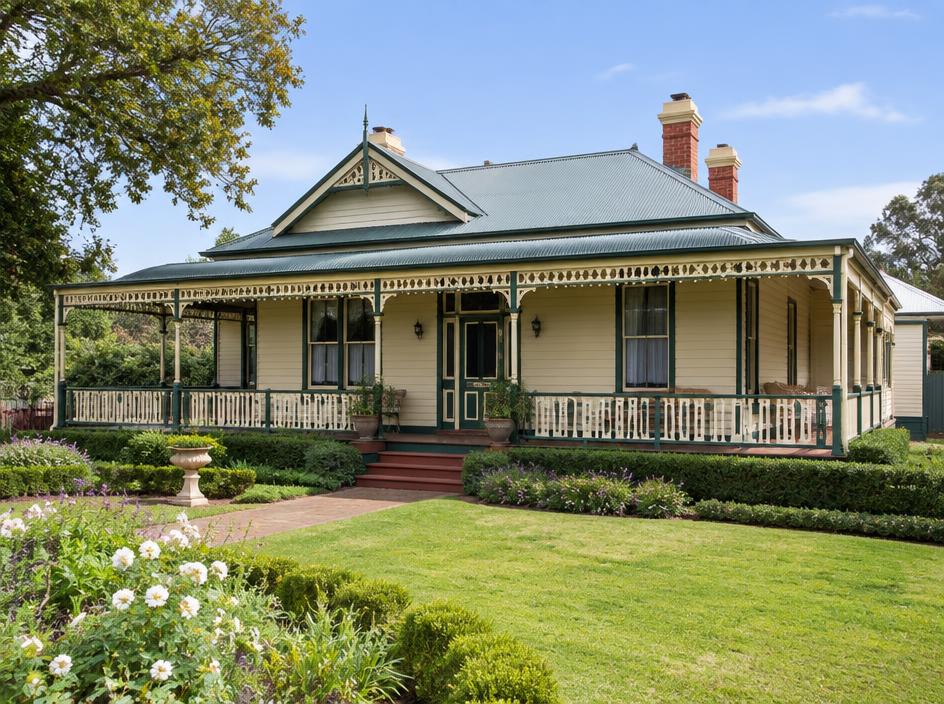
Opaque exterior coatings on front fences and pickets where a solid colour suits the house.
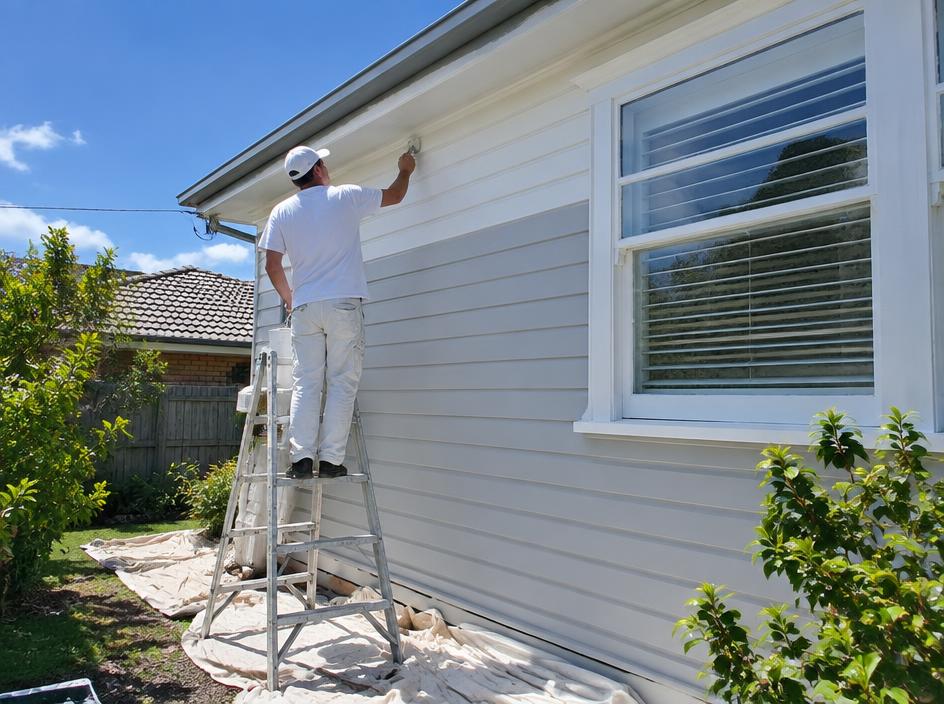
Cleaning and coating older galvanised or powder-coated fences where a suitable system is available.
Shows the grain and keeps a light, natural colour. Needs re-coating more often because there is little pigment to block sun.
Adds colour while the grain still shows. A good balance of looks and UV protection for most paling fences.
Covers the timber like paint but stays thinner and more flexible. Useful for evening out a fence with mixed old and new boards.
A full film finish for pickets and feature fences. Gives the widest colour choice but needs proper preparation to avoid peeling.
Each product sits differently in the timber. The right one depends on the fence, the look and how often you want to re-coat.
| Finish | Characteristics | Typical applications | Considerations |
|---|---|---|---|
| Water-based stain | Low odour and quick drying. | Paling fences and quick refresh coats. | Easy to clean up and re-coat, but may need more frequent maintenance in full sun. |
| Oil-based stain | Penetrates deeply into the timber. | Hardwood and very dry, weathered boards. | Richer colour and good penetration, with longer drying times and solvent clean-up. |
| Decking and fence oil | Feeds and darkens timber. | Feature fences and hardwood screens. | Looks warm and natural, though it weathers faster than a pigmented stain. |
| Exterior acrylic paint | Flexible film coating in solid colour. | Pickets, front fences and gates. | Hides patchy timber well but must go onto clean, sound, primed boards. |
Most coating failures trace back to the surface underneath, not the product.
Dirt, mould and grey surface fibres are removed so the coating bonds to sound timber.
Loose palings and popped nails are fixed before coating, so the finish is not broken later.
Timber must be dry, and we avoid coating in extreme heat or ahead of rain.
Plants, paths and the neighbour's side are covered against drips and overspray.
We check the timber condition, existing coating and any repairs needed.
We agree the product type and colour, with a test patch if you want to see it on your boards.
The fence is cleaned and left to dry, and loose fixings are tightened.
Garden beds, paving and nearby surfaces are covered.
Coats are applied by brush, roller or spray to suit the fence and the neighbour's situation.
We check coverage, touch up missed spots and remove all coverings.
The method changes with the fence, the product and what is next to it.
Works stain into rough-sawn palings and around rails for the most even penetration.
Speeds up flat, smooth boards while keeping control near plants.
Fast on long runs, used only where overspray can be controlled and the weather is calm.
Low-pressure washing and timber cleaners so soft timber is not furred or gouged.
A ten-year-old fence has gone silver-grey. It needs cleaning, a few new palings and a semi-transparent stain.
A new treated pine fence is ready for its first coat once the timber has dried out enough.
A white picket fence is peeling. It needs scraping, priming and two coats of exterior paint.
These cards describe the kind of coating brief we price. They are not photographs of finished local jobs; images are placeholders until job photos are added.
We coat and restore fences in these suburbs and nearby streets.
Flood-aware fences, steel posts and post-flood repairs across the river from the CBD.
View detailsPicket fronts, timber boundaries and careful removal of old fences around early-1900s to 1960s homes.
Request a quoteFirst fences for new homes, slat frontages and pool barriers on the northern side.
Request a quoteSecurity perimeters, wide gates and impact repairs for industrial yards on the Sturt Highway.
Request a quotePractical repairs and low-upkeep steel for established homes around Turvey Tops.
Request a quotePrivacy fencing near the house and stock-proof wire where blocks meet farmland.
Request a quotePool barrier upgrades, boundary renewals and front fences along Lake Albert Road.
Request a quoteSteel privacy fencing for side and rear boundaries, set on concreted posts and finished in a colour both neighbours can live with.
View servicePaling, lapped and capped timber fences with post and timber grades chosen for ground contact, termites and summer heat.
View serviceStrainer assemblies, steel posts, ringlock, plain, barbed and electric wire for stock, boundaries and house yards on the city fringe.
View servicePowder-coated horizontal and vertical slat fences, screens and gates with the gap size chosen for privacy, breeze and light.
View serviceLeaning posts, broken palings, dented steel panels, storm and vehicle damage, and gates that no longer latch, fixed without replacing the whole run.
View serviceBoundary, pool, security, rural and slat fencing planned around your block, your neighbours and Wagga Wagga's hot summers and frosty winters.
View serviceGlass, aluminium and steel pool barriers planned around height, gaps, gates and climbable zones before style is chosen.
View serviceChain wire, welded mesh and palisade perimeters with vehicle and pedestrian gates planned around how the site actually runs.
View serviceRemoval of the old fence, disposal and a new fence built on the same day plan, so your yard is open for as short a time as possible.
View serviceCoating jobs are priced on fence length and height, timber condition, how much preparation is needed and the product chosen.
| Fence size | Length, height and one or both sides set the area to coat. |
|---|---|
| Timber condition | Very weathered timber needs more cleaning and may take more product. |
| Product | Oils, water-based stains and paint systems differ in cost and number of coats. |
| Repairs | Paling and rail repairs before coating are priced separately. |
| Access | Gardens, sheds and tight passages slow preparation and application. |
Coating both sides of a shared fence means agreeing access with your neighbour first.
Get a staining quoteTreated pine is often wet from treatment and needs time to dry. A simple water-drop test shows when the timber is ready to absorb stain.
It depends on sun exposure, product and timber. Fences in full sun need re-coating sooner than shaded ones. We will suggest a schedule for your fence.
Stain soaks in and wears gradually, so re-coating is easier. Paint gives a solid colour but can peel and needs more preparation when re-done.
New Colorbond does not need painting. Older faded steel fences can be coated with a suitable system, but the surface must be cleaned and prepared properly.
Only with their agreement. Many neighbours share the cost or choose their own colour for their side.
No. Damaged boards should be replaced first. Solid-colour stain can help new and old boards look more even.
Send photos of your fence and the colour or look you have in mind. We will inspect the timber, recommend a product and send a written quote.
Keep sprinklers off the fence, keep garden mulch and soil away from the bottom palings, and wash off dust once or twice a year. These small habits stretch the time between coats.
We will not coat over rotten or loose boards, and we will not apply product in conditions that stop it curing properly. If the timber is past saving, we will tell you before you spend money on a coating.